

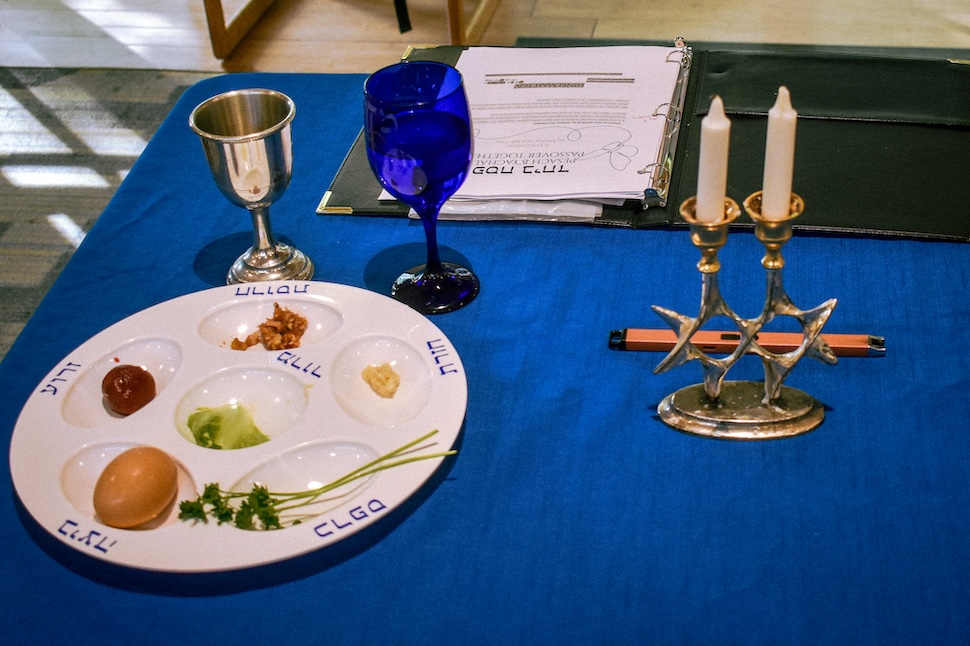
 At Machar, we celebrate Passover with a Seder, as do Jews around the world. The story of Passover is inextricably tied to the story of the Exodus as told in the Torah, though at Machar we recognize the problems of this story as well as its power. Humanistic Jews see Passover as a celebration of freedom, of unity, and of human agency, and of the power of myth and story – even as we recognize that the Biblical story of the Exodus is problematic both historically and theologically.
These ideas form the core of the story we tell at Machar’s annual community Seder, typically held at a local UU Church or as a Potluck Picnic in a local park.
Machar Humanistic Haggadah PDF
Over the last 2700 years, Jews have struggled for freedom or have sought escape from persecution. The 20th century exodus of thousands of Jews from Europe and from Muslim countries is the latest chapter in that long saga, and on Passover, we celebrate the timeless quest for freedom – for Jews, and for others. Machar’s Haggadah, the book we use to celebrate the Passover Seder, includes a Humanistic retelling of the exodus from Egypt and recognizes Jews’ and others’ quests for freedom around the world.
Historically, it is probable that Passover is an amalgam of two older seasonal celebrations that marked the arrival of spring, because the ancient story of the Jewish people is a story of both herders and farmers.