

Shemini Atzeret has a mysterious background – its name simply means “eight day of assembly”: it is an eighth day appended to the seven days of Sukkot as set forth in the Bible. Simchat Torah became a separate celebration in the Middle Ages. Before then, Shemini Atzeret was simply a two-day festival outside the land of Israel because, like Rosh Hashanah, it was identified as an important holiday by the Torah.
If we don’t live in the Middle East, why celebrate this holiday? At Machar, Sukkot is important because of its connection to the natural cycle of the year, and because agricultural settlements were a necessary first step toward the further development of science, technology, the arts, and the recognition of the interconnectedness of humans to nature and of humans to one another.
Shemini Atzeret is important in Jewish tradition for a reason Humanistic Jews appreciate: Over time, it became a holiday for Ashkenazi (European) Jews to remember their ancestors and others of prior generations who had died. And the second day of Shemini Atzeret – which we know as Simchat Torah – provides an opportunity to celebrate the role of Jewish literature and learning in helping to define who we are as Jews, and in the development of Jewish and secular culture.
Each year in the fall, usually on a Sunday, we assemble in an outdoor space – usually a public park – and create an area to celebrate the holiday of Sukkot. Children create crafts that allow us to have decorations, and often also make simple treats, including edible
Sukkot made from pretzels, graham crackers, and chocolate. We sing songs related to the natural themes of the holiday, like rain, water, agriculture, and our connection to nature. We have a lulav and etrog and talk about why some Jews might shake them, and others might not – and we also talk about how the lulav and etrog show our interdependence with nature and with other people around the world. And we usually finish our celebration with a potluck lunch.
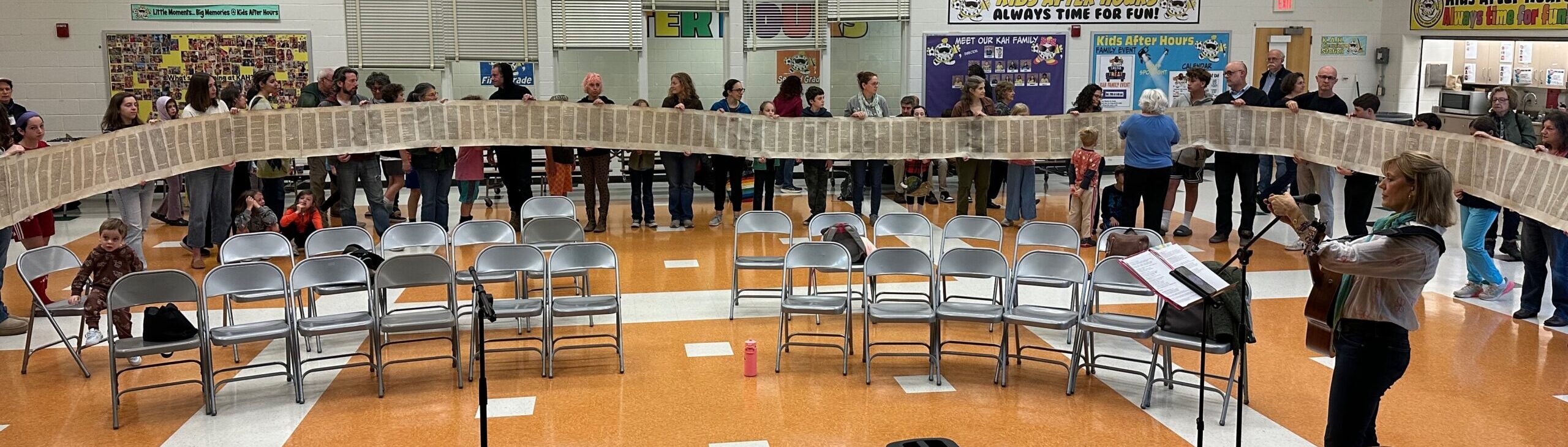
We don’t typically mark Shemini Atzeret as a separate occasion. We do, though, take time to mark Simchat Torah during the school session nearest the holiday. Traditionally, Simchat Torah involves marching with the Torah in hakafot (“circles”) around a synagogue space or dancing with the Torah. Many Humanistic Jews are wary of this, because they want to ensure we don’t confuse respect for the importance of the Torah with idolizing it. Humanistic Jews view the Torah as an immensely important work that is the product of human hands: It can be respected, read, and learned from and about, but elevating it to the level of an item to be worshipped isn’t compatible with Humanistic approaches to Jewish life.
But it is also important that Machar members know that Machar’s sefer Torah (Torah scroll) is theirs, and so we make sure to teach about it and show it to our school children and to adults. Sometimes, our rabbi brings our Torah to children’s classrooms and to an adult education program so our members can see the scroll and all of its unique aspects, including its numerous corrections, repairs, and wear from years of use. Other times, we unroll the Torah as far as we can, doing it carefully so that everyone can help hold the Torah up while our rabbi points out different passages and parts of the text.
All three of these holidays show how deeply traditional symbols and ideas still matter to the very modern approach we take to Jewish life at Machar!