

In the Torah, the Ten Commandments are listed in the Books of Exodus and Deuteronomy. Each of these sets includes the instruction to honor Shabbat by working six days each week and resting on the seventh. Humanistic Jews have reimagined this weekly holiday, which runs from Friday evening to Saturday evening.
The Hebrew word shabbat means to cease or rest from working, and Jewish tradition recognizes it as marking a 25-hour period of rest. Our bodies and minds need time to pause their usual activities, to change what they’re doing so they can restore themselves and carry us through our daily lives.
Machar’s Humanistic Jewish Shabbat celebrations recognize that need and celebrate reaching a week’s end and the start of a new week, bringing uplift through music, readings, poetry, and time in community with others. Some Machar Shabbat celebrations also include special programming for events like Pride Month, the National Council of Jewish Women’s Repro Shabbat, or Jews United for Justice’s Labor on the Bimah.
Machar’s Kabbalat Shabbat services marking the beginning of Shabbat generally take place on the second Friday of each month via Zoom. We join together, sing, share readings, and spend some time in learning and discussion. We also share the ups and downs of our lives
with one another to celebrate and find support in difficult times. Please visit our Events calendar for dates and times.
We know not everyone can make a Friday-evening program. We’re happy to share the Humanistic blessings we use at Machar to light candles to mark the start of Shabbat with wine and challah or other bread, as well as our Teal Shabbat video.
Machar’s Havdalah celebrations mark the end of Shabbat and the start of a new week. Havdalah means “distinction,” and this is an especially potent idea for Humanistic Jews: The point of Shabbat is not to provide us rest for rest’s sake. We rest so we can be ready to return to the work of changing the world. Havdalah marks the moment of that return, the distinction between a time of rest and a time to work in and for the world we share.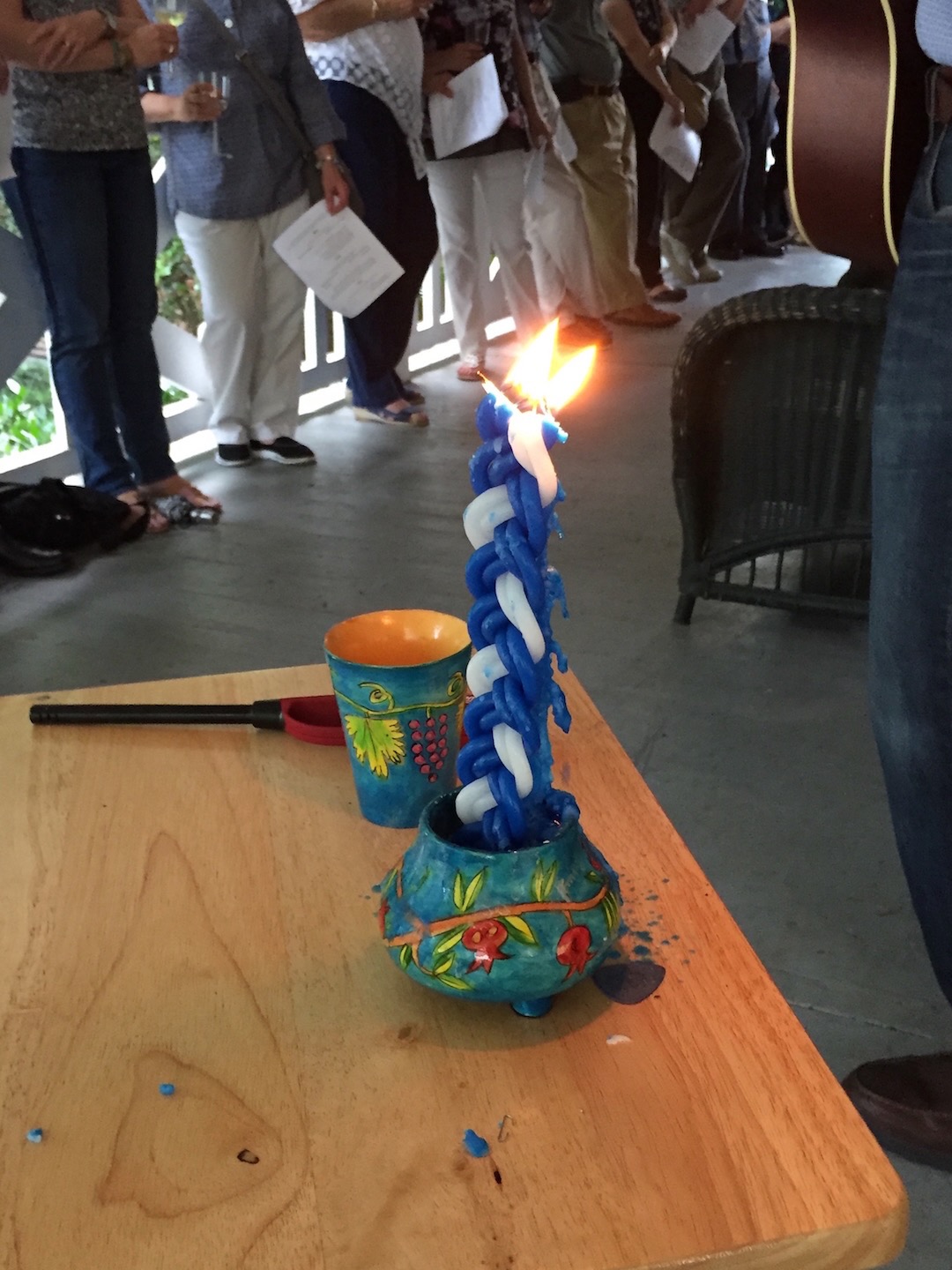
While Machar’s Havdalah ceremonies are relatively brief, they bring our attention to the themes of returning to the world. We use traditional symbols of Havdalah – wine, spices, and a Havdalah candle – to mark the close of Shabbat as a community. Machar’s Havdalah ceremonies are often in-person because marking Havdalah together, sharing light, wine, spices, and a meal, reminds us that we work in the world with and for one another.
Machar Havdalah ceremonies happen once or twice per month. Please visit our Events calendar for dates and times.
We know not everyone can make a Saturday-evening program. We’re happy to share the Machar One-Page Havdalah with the blessings we use during Machar Havdalah celebrations.